

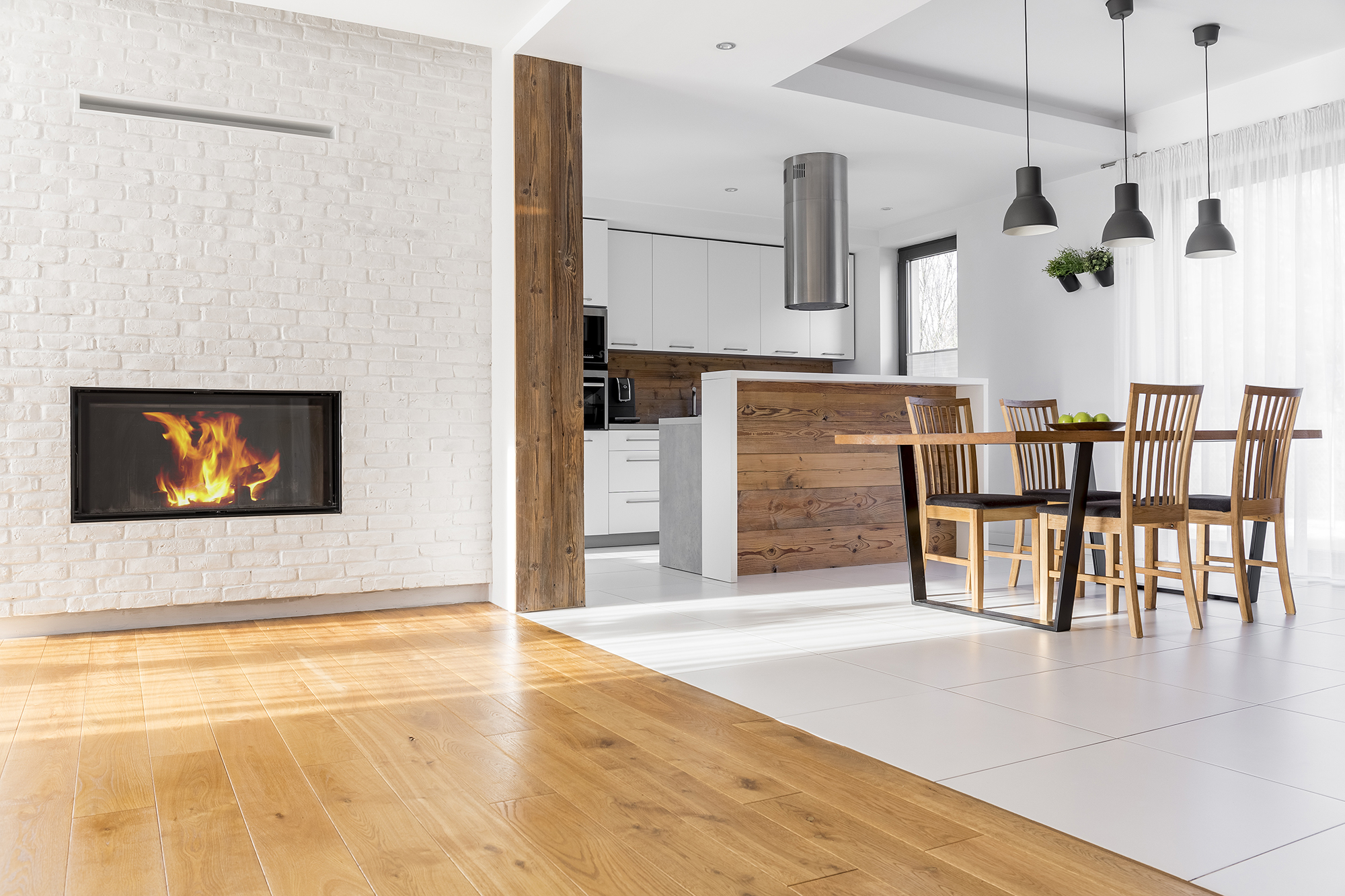
Replacing flooring rarely happens in a perfect blank canvas. Most homeowners are working around existing tile in kitchens, bathrooms, laundry rooms, entries, or fireplaces. The challenge is not just finding a laminate floor that looks good on its own. It is finding one that makes sense beside the tile that is staying.
When laminate and tile do not relate to each other, the home can feel chopped up. The transition line becomes obvious, the colors compete, and even a new floor can look like a patch. The good news is that laminate and tile do not need to match exactly. They need to coordinate correctly.
Do Not Try to Match Materials Too Closely
One of the most common mistakes is trying to find laminate that looks like the tile color. This usually fails because laminate and tile reflect light differently. Tile often has a harder, cooler surface, while laminate has wood grain, plank movement, and a warmer visual texture. When two materials are almost the same color but not quite, the difference becomes more noticeable.
A better approach is to create a deliberate relationship. If the tile is beige, cream, taupe, gray, charcoal, or stone-look, choose a laminate that shares one undertone but has a clear material difference. For example, a warm beige tile may work with a natural oak laminate, while a cool gray tile may need a softer neutral brown plank rather than another gray surface.
Check Undertones Before You Check Color
Undertone is the hidden reason some floors clash. Existing tile can lean pink, yellow, green, blue, orange, or gray. Laminate can do the same. If the tile has a pink-beige undertone and the laminate has a yellow-gold undertone, the transition can look off even if both samples are technically “neutral.”
The easiest test is to place samples side by side in natural light and look for the color that jumps out. If the tile suddenly looks pinker, the laminate may be too yellow. If the laminate looks orange, the tile may be too cool. The best pairing usually feels calm before it feels exciting.
Match the Visual Weight
Visual weight is how heavy or light a floor feels in the room. A large, dark slate-look tile has strong visual weight. A pale, thin, low-variation laminate has light visual weight. If those two sit next to each other without a plan, the home can feel split into two different design stories.
To create balance, choose laminate that holds its own beside the tile. That might mean a medium tone, a wider plank, a matte finish, or a more grounded wood visual. If the existing tile is light and subtle, the laminate should not be overly rustic, heavily scraped, or full of dramatic knots. The two floors should feel like neighbors, not rivals.
Plan the Transition Piece Early
The transition strip is not a small afterthought. It controls how professional the whole project feels. Depending on the height difference between the laminate and tile, the installer may need a T-molding, reducer, end cap, or other transition profile. Choosing the right profile helps protect the laminate edge and creates a cleaner movement from one surface to the next.
Height matters because laminate requires proper underlayment and expansion space. Tile is usually fixed and rigid, while laminate is a floating floor that needs room to move. A tight, poorly planned transition can lead to edge damage, noise, or buckling later. This is where professional measurement makes a real difference.
Think About Plank Direction and Sightlines
Plank direction can either calm a transition or draw attention to it. In many homes, laminate looks best when it runs with the longest sightline or main flow of traffic. However, if the laminate meets tile in a visible doorway or open-plan kitchen, the direction should also consider how the edge will look.
A laminate plank running straight into a tile line can look clean when aligned well. A plank running awkwardly across several broken tile edges can look busier. Before installation, it is worth mapping where the transition will land, what someone sees from the front door, and how the flooring connects between rooms.
Matching new laminate flooring to existing tile is less about finding a perfect match and more about creating a controlled relationship. Undertone, visual weight, texture, plank direction, and transition height all matter.
For homeowners updating part of a home instead of replacing every surface, R-n-R Flooring and Design can help compare laminate flooring samples against existing tile and plan the transition details correctly. Visit Ogden, UT to review options in person, or contact us for flooring help across Weber, Davis, Morgan, and Salt Lake, UT and Southern Idaho, ID and Southwestern Wyoming, WY.


