

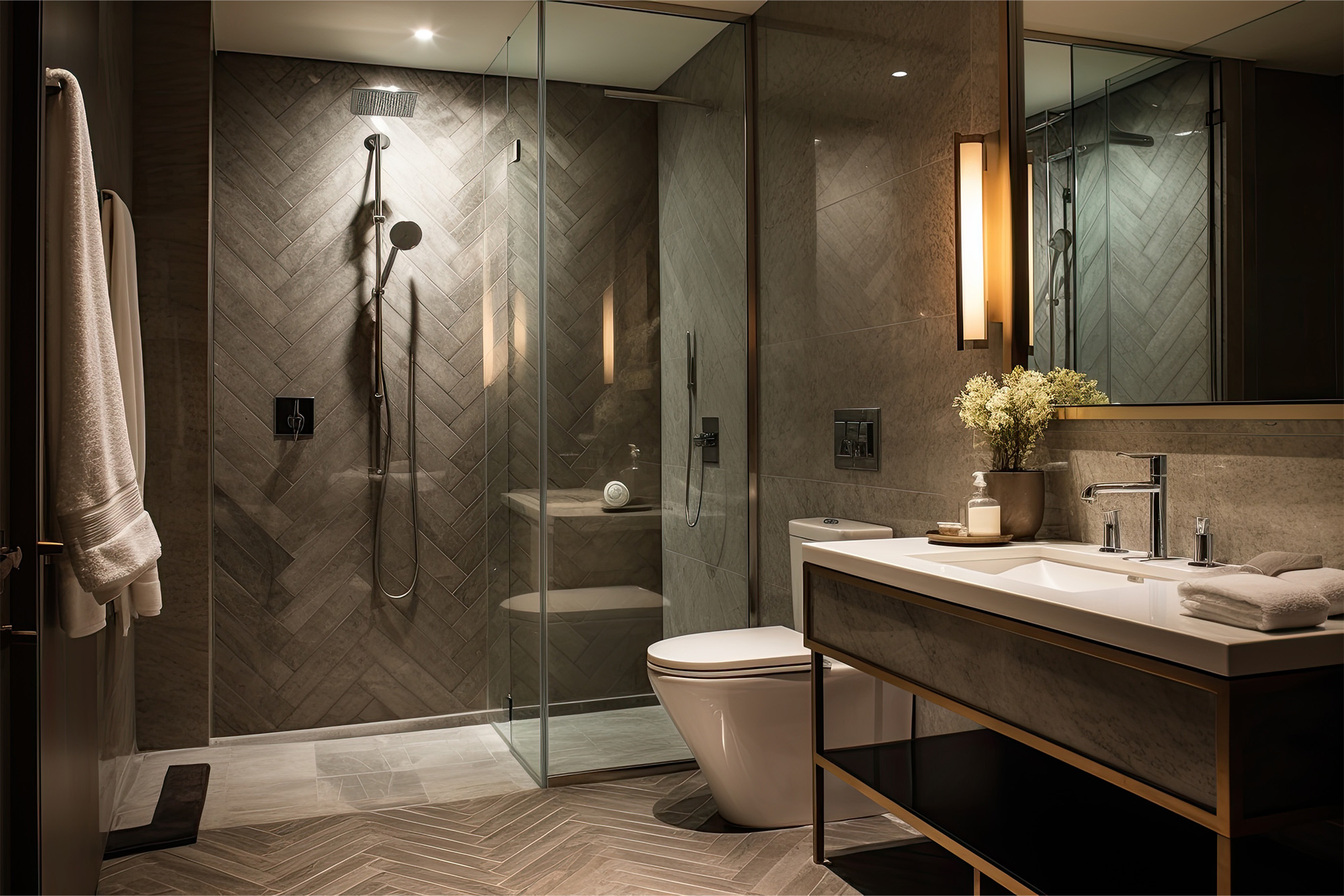
Both materials can look stunning in a shower, and both can perform well for years. The real decision comes down to how each one reacts to water and acid, and how much upkeep you are actually willing to commit to.
Porcelain is manufactured under extreme heat and pressure, which gives it a water absorption rate below half a percent. Practically speaking, that means porcelain does not need sealing and will not stain, etch, or degrade from water exposure over time. Natural stone, whether it is marble, travertine, or limestone, is porous by nature and reacts chemically with anything acidic, which changes the entire maintenance conversation from day one.
The Etching Problem Most People Do Not Expect
Marble, travertine, and limestone all contain calcium carbonate, and calcium carbonate reacts with acid on contact. This means a splash of shampoo with citric acid, a dropped bottle of a lemon based cleaner, or even normal soap scum buildup can cause a dull spot on the stone's surface called etching. Etching is not a stain sitting on top of the stone that you can wipe away. It is a change to the surface itself, and once it happens, the only fix is honing or repolishing that section, not cleaning it.
Porcelain simply does not have this vulnerability. Its manufactured composition does not contain the calcium carbonate that reacts to acid, so the same shampoo splash or dropped bottle that would etch marble has no effect on porcelain at all. This single difference is often the deciding factor for a shower floor specifically, since a shower sees far more product exposure than almost any other surface in a home.
Slip Resistance Works Differently Than People Assume
Slip resistance is often treated as a simple porcelain versus stone question, but it actually comes down to finish more than material. Certain natural stones, particularly slate and honed or tumbled travertine, have a naturally textured surface straight from the quarrying and finishing process that provides real grip without any additional treatment. Polished stone, on the other hand, can be just as slick as polished porcelain when wet.
Porcelain's slip resistance depends entirely on which finish you choose at purchase, since a glossy polished porcelain tile and a matte textured one perform completely differently underfoot when wet. This means the safety question is not really natural stone versus porcelain at all. It is about choosing a textured or matte finish in either material and avoiding a polished finish on any shower floor, regardless of which one you pick.
Sealing Is A Real Ongoing Commitment With Stone
Natural stone needs a penetrating sealer applied at installation and reapplied on a regular schedule, typically every one to two years in a daily use shower, sometimes sooner depending on the specific stone's porosity. Skipping resealing does not cause immediate damage, but it gradually reduces the stone's resistance to staining and water absorption, which is when homeowners start noticing dark spots or a change in how the surface feels.
This is not a reason to avoid natural stone if you love the look, but it is worth being honest with yourself about whether resealing on schedule is something you will actually keep up with. Porcelain removes this task from your maintenance list entirely, which matters more to some homeowners than others depending on how hands on they want their upkeep to be.
Natural stone needs a specific pH neutral, non acidic cleaner every time, not just when it looks dirty
Porcelain can handle a wider range of standard bathroom cleaners without any surface risk
Both materials benefit from a squeegee after each shower to reduce mineral buildup from hard water
Neither Option Is The Wrong Choice
Natural stone brings a depth of color variation and a texture that manufactured porcelain, even the most convincing stone look styles, still cannot fully replicate. Porcelain brings a worry free maintenance routine and a consistency from tile to tile that some homeowners genuinely prefer over the natural variation stone offers. Both are legitimate, well performing choices for a shower floor, and the right one really depends on how much sealing and product awareness you want to build into your routine versus how much you value the specific look and feel that only natural stone provides.
If you are torn between the two, seeing both materials in person under real shower lighting makes the decision a lot easier than looking at photos. Our team can walk you through samples of each and talk honestly about which one fits how you actually live. Contact us to schedule a time to compare them side by side.
R-n-R Flooring and Design carries both natural stone and tile options suited to shower installations, with a showroom at Ogden, UT ready to help homeowners throughout Weber, Davis, Morgan, and Salt Lake, UT and Southern Idaho, ID and Southwestern Wyoming, WY choose the right material and finish for their space.


