

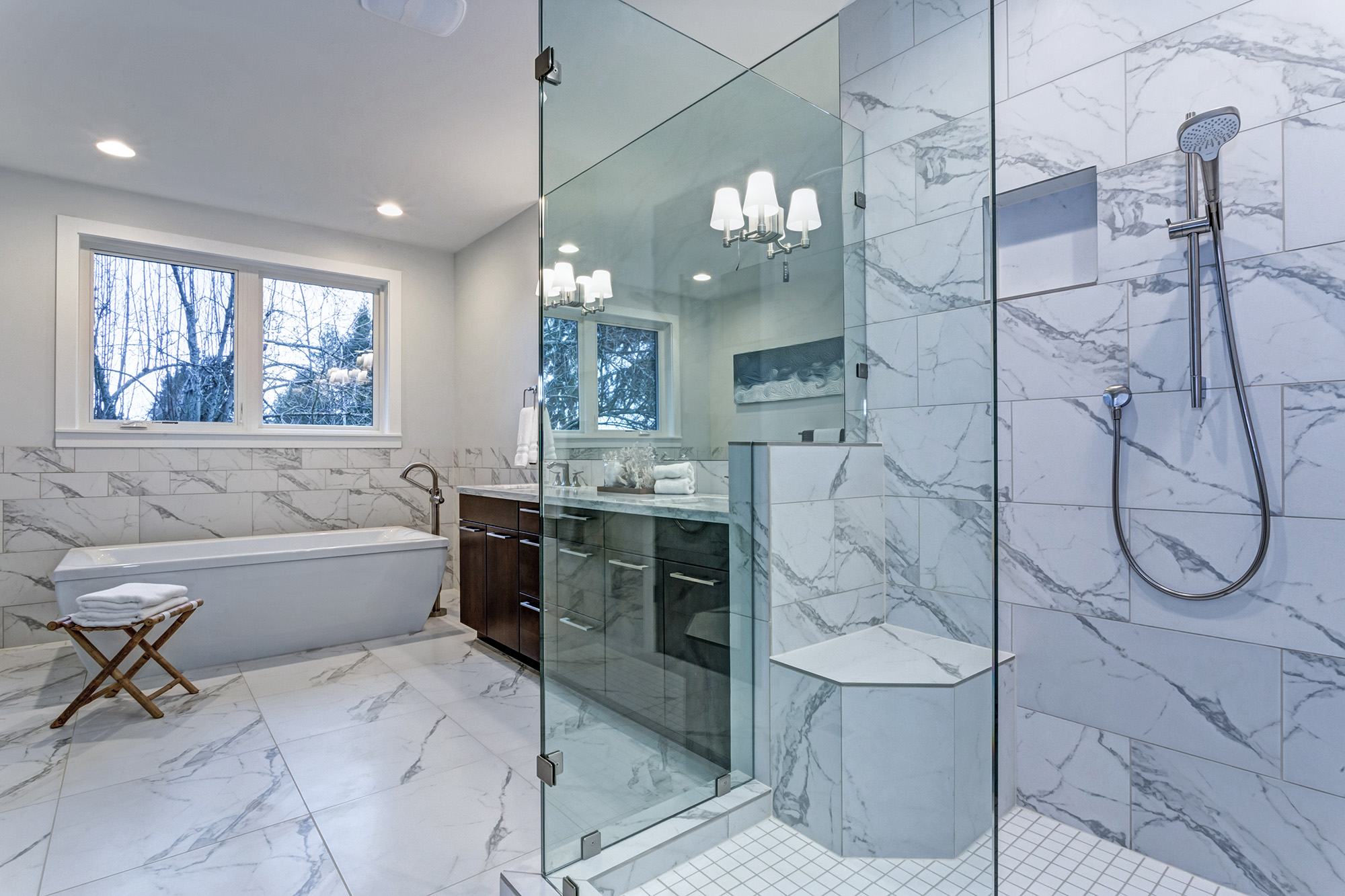
Tile drenching is the idea of using tile across more surfaces than usual. Instead of limiting tile to the shower or floor, the same tile or related tile may continue onto walls, niches, pony walls, tub surrounds, or even the full bathroom envelope. When done well, it can make a bathroom feel calm, architectural, and more custom.
When done poorly, it can feel cold, expensive, and visually overwhelming. Tile drenching is not automatically a luxury upgrade. It is a design strategy that needs the right room, the right tile, the right grout, and a clear reason for using more material.
Where Tile Drenching Works Best
Tile drenching works especially well in small bathrooms where too many material changes would make the room feel chopped up. Continuing the same tile from the shower onto surrounding walls can make the space feel larger and more intentional. It can also work well in primary bathrooms where the goal is a spa-like, built-in look.
The trend is strongest when the tile has subtle movement rather than aggressive pattern. Soft stone-look porcelain, warm limestone visuals, handmade-look neutrals, and low-contrast textured tile tend to work better than loud graphics. The more surface area the tile covers, the more important restraint becomes.
When It Becomes Too Much Tile
Tile drenching can go wrong when the tile is too dark, too glossy, too patterned, or too cold in tone. A dramatic tile that looks exciting on one wall may feel heavy when wrapped around the whole room. Glossy tile across several walls can also create glare, especially under bathroom lighting.
It can also be too much from a budget and maintenance standpoint. More tile means more installation labor, more grout, more cuts, more waterproofing considerations, and more surfaces to clean. If the room does not need full-height tile, a partial wall approach may deliver the same visual upgrade without the extra cost.
Technical Details Matter More Than the Trend
Tile drenching is not just a style decision. In wet zones, proper waterproofing, substrate preparation, slope, movement joints, mortar selection, and grout choice all matter. A beautiful tiled bathroom can still fail if the wall system behind it is not prepared correctly.
Slip resistance is also important. A tile that works beautifully on the wall may not be appropriate for the bathroom floor or shower floor. Floor tile should be selected with texture, size, and traction in mind. Smaller mosaics can provide more grout lines for grip in shower floors, while larger wall tiles can reduce visual clutter above.
The Grout Decision Can Make or Break It
With tile drenching, grout becomes part of the design. If the grout contrasts too strongly, every wall can turn into a grid. That may be intentional in some modern designs, but it can also make the room feel busy. Low-contrast grout usually creates a more seamless and elevated look.
Maintenance should be considered too. Lighter grout can brighten a room but may show discoloration faster in wet or high-use areas. Darker grout can be practical, but it may create a heavier visual effect. The best choice usually balances appearance, cleaning expectations, and the tile’s natural movement.
A Smarter Way to Try the Trend
Homeowners do not have to tile every surface to get the effect. A shower wrapped in one tile, with a coordinating floor tile and painted upper walls, can feel just as intentional. Another option is to use the same tile on the bathroom floor and shower walls, then introduce a quieter mosaic on the shower floor for traction.
A half-height tiled wall can also be a strong compromise. It protects walls, adds design detail, and gives the bathroom a custom look without turning the whole room into a hard surface. The key is deciding where tile adds function and where it is only adding cost.
Tile drenching can be a smart bathroom upgrade when it improves flow, simplifies the design, and uses the right materials. It becomes too much when the tile choice is loud, the grout is too busy, or the installation plan ignores real bathroom performance.
For homeowners considering bathroom tile, shower tile, or a more custom tiled look, R-n-R Flooring and Design can help compare styles, finishes, grout colors, and practical installation needs. Visit Ogden, UT to see tile options in person, or contact us for bathroom flooring and tile solutions throughout Weber, Davis, Morgan, and Salt Lake, UT and Southern Idaho, ID and Southwestern Wyoming, WY.


