

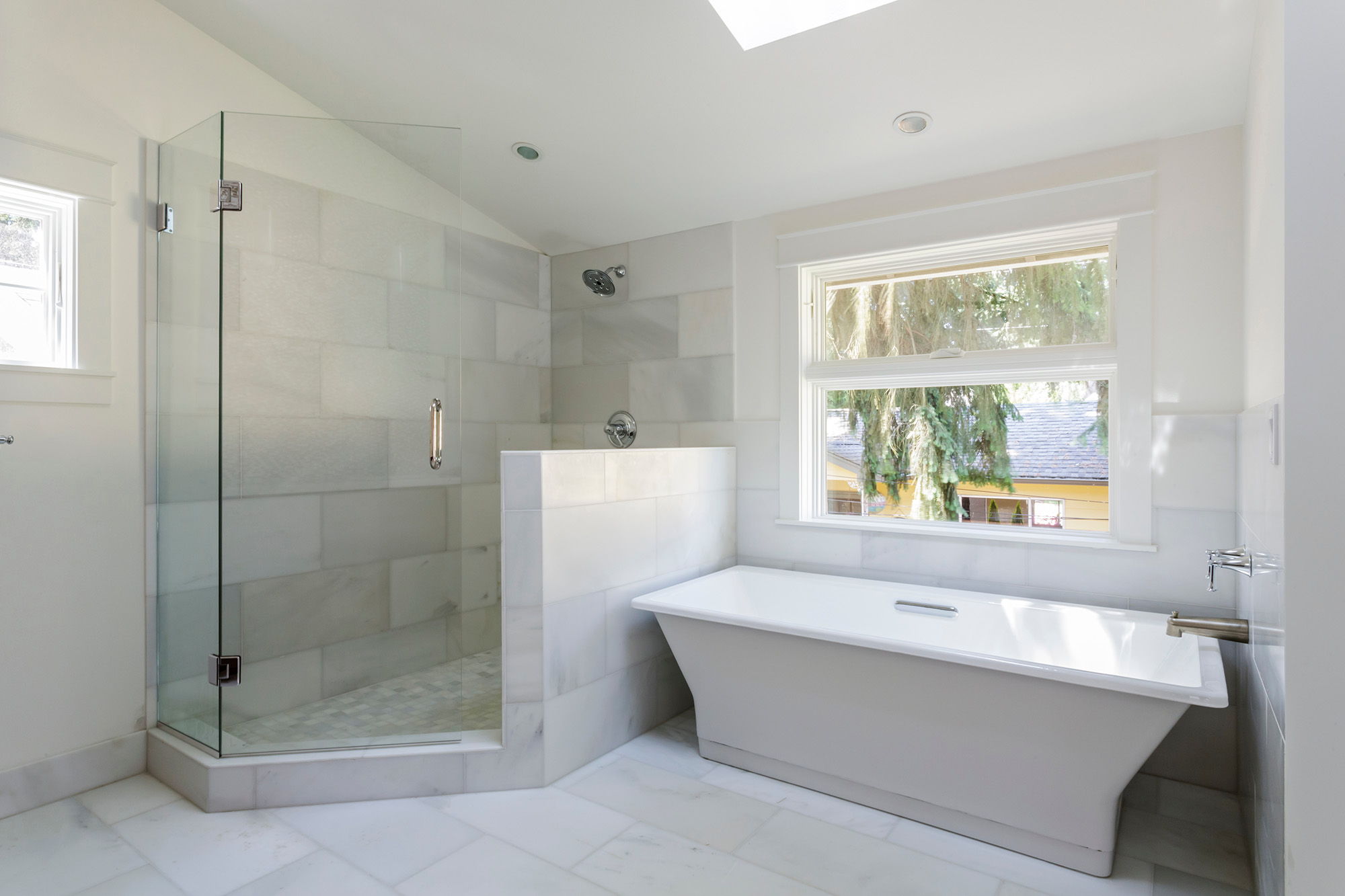
Anyone who has lived in Northern Utah knows the struggle of hard water. It spots the shower glass, crusts the faucets, and leaves a chalky film on tile that seems to come back the moment you wipe it away. In rural areas on well water, the mineral content can be even higher, and the staining shows up faster.
The frustrating part is that scrubbing harder often makes it worse. Understanding what hard water actually does to tile and grout is the first step to keeping your floors and surfaces looking clean with a lot less effort.
What Hard Water Leaves Behind
Hard water carries dissolved minerals, mainly calcium and magnesium. When that water evaporates off a tile surface or soaks into porous grout, the minerals stay behind as a stubborn white or off-white deposit known as scale.
Grout is the real trouble spot because it's porous by nature. Those minerals work their way into the tiny channels of unsealed grout, where they build up and trap dirt. That's why grout lines often look dingy long before the tile itself does, and why surface cleaning alone never fully fixes it.
Sealing Is Your First Line of Defense
The single most effective move is sealing your grout, and re-sealing it on a schedule. A quality penetrating sealer fills the porous structure so minerals and grime sit on top instead of soaking in, which makes routine cleaning dramatically easier.
For tile itself, glazed porcelain and ceramic resist mineral staining well because their surface is essentially glass. Natural stone like travertine or slate is more porous and reacts to acidic cleaners, so it needs its own stone-specific sealer and gentler care in hard-water homes.
Cleaning Without Damaging the Surface
How you clean matters as much as how often. Harsh acidic descalers can cut through scale, but they also eat away at grout and etch natural stone, so they should be used carefully and sparingly.
Wipe surfaces dry after use to stop minerals from depositing
Use a pH-neutral cleaner for everyday maintenance
Reserve mild descaling products for built-up scale, and rinse well
Avoid acidic cleaners entirely on natural stone
Smart Choices for High-Mineral Areas
If you're remodeling in a hard-water or well-water area, a few product decisions make life easier for years. Large-format porcelain tile means fewer grout lines, which means fewer places for minerals to collect.
Pairing that with an epoxy or high-performance grout, which is far less porous than standard cement grout, gives you a surface that genuinely resists staining. It's a small upgrade at install that pays off every single week afterward.
Beating hard water starts with the right tile, the right grout, and a proper seal, and we help you get all three. At R-n-R Flooring and Design, our showroom carries glazed porcelain, large-format tile, and high-performance grout options suited to Utah's mineral-heavy water, plus free in-home measurements. We proudly serve Weber, Davis, Morgan, and Salt Lake, UT and Southern Idaho, ID and Southwestern Wyoming, WY.
Stop by Ogden, UT to see low-maintenance tile and grout options in person. Contact us today to schedule a free measurement and build a bathroom or kitchen that stays clean with less work.


