

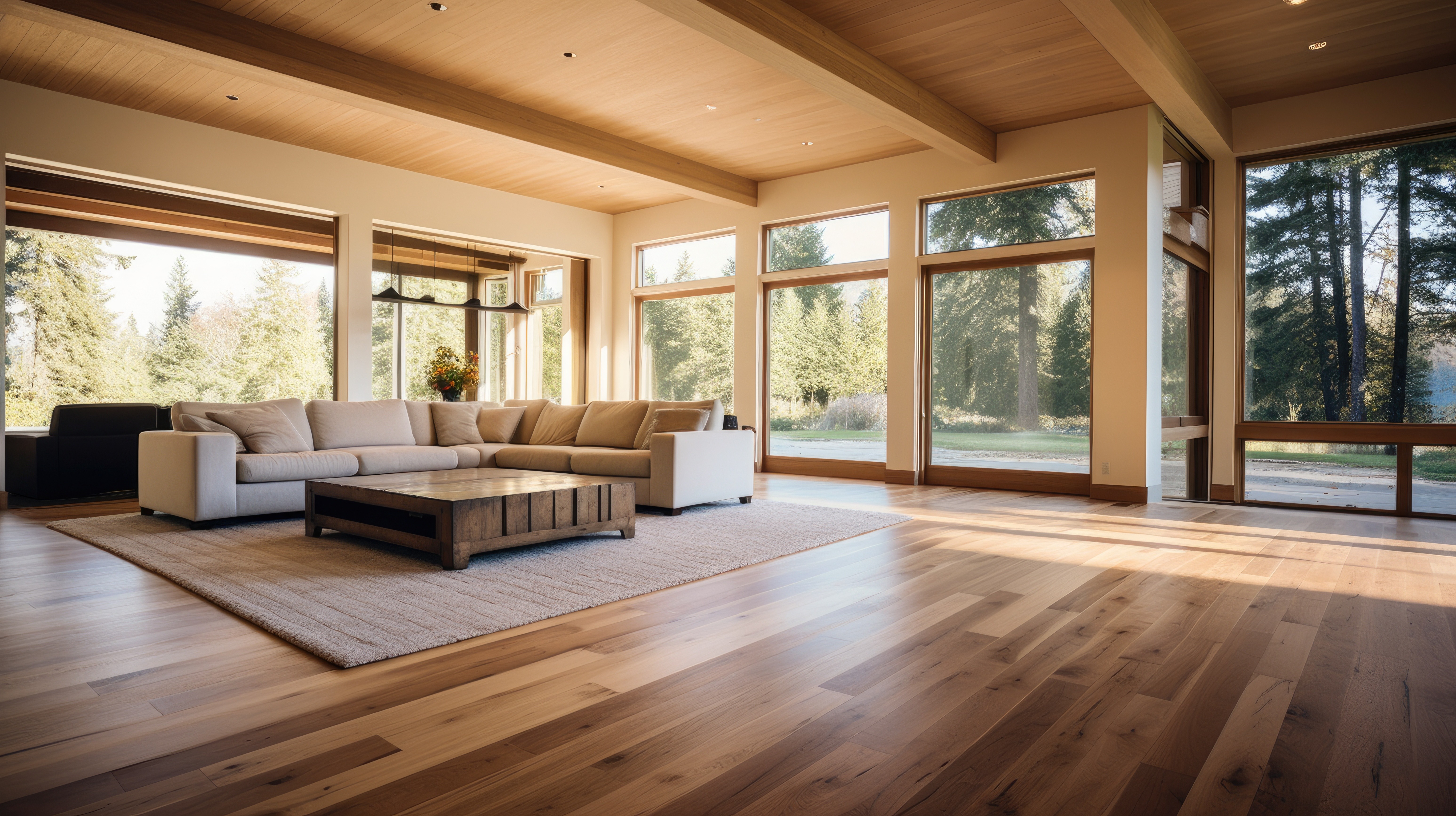
Every fall, homeowners on the higher ground around Weber and Davis County start noticing frost on their grass and windshields weeks ahead of friends living closer to the valley floor. It is not a coincidence and it is not your imagination. It comes down to basic atmospheric physics, and it has a real, practical effect on how laminate flooring behaves near exterior doors and mudrooms in those same homes.
The Temperature Drop Is Not Random
Air temperature drops roughly three and a half degrees Fahrenheit for every thousand feet of elevation gain, a relationship called the environmental lapse rate. A home sitting six hundred to a thousand feet higher than the valley floor, which describes a lot of the foothill communities along the Wasatch bench, is genuinely two to three degrees colder on a clear night before you even factor in wind or exposure. That is often the exact margin between a frosty morning and a normal one.
Clear, calm nights make this worse through radiational cooling, where the ground loses heat straight up into the atmosphere with nothing to trap it. Higher elevation sites lose that heat faster because there is less atmosphere above them to slow it down. The valley floor, meanwhile, often holds onto a shallow layer of warmer air a while longer, especially in early fall before a real inversion pattern sets in for winter.
Why This Matters Specifically At Exterior Doors
Laminate flooring depends on a consistent expansion gap around its perimeter, typically a quarter inch, to accommodate seasonal movement as humidity and temperature shift. Rooms near exterior doors and mudrooms in higher elevation homes see wider and faster temperature swings than interior rooms, because the door itself is a weak point in the thermal envelope and the ground outside is already colder than it would be lower down the bench.
That swing matters more in early fall than people expect, because it arrives weeks before the rest of the house is thinking about winter prep. A mudroom floor near a door that is opened and closed constantly experiences repeated cold air infiltration well before a homeowner has switched the furnace over or checked weatherstripping, and laminate responds to that temperature change even faster than it responds to humidity change alone.
What Actually Happens To The Planks
Cold air settling directly on a laminate floor near a door causes the surface layer to contract slightly faster than the core, which is a normal and expected behavior within a properly installed expansion gap. Problems only show up when that gap was cut too tight during installation, or when a rug, transition strip, or built in cabinetry was installed right up against the wall without leaving room for that seasonal movement.
This is the exact scenario where an installer's experience with higher elevation homes specifically pays off. A crew used to installing in valley floor conditions alone might leave a standard gap that works fine there but runs tighter than it should in a colder, higher elevation entry that swings temperature more aggressively. We adjust expansion gap sizing for exactly this reason on installs above a certain elevation line in our service area.
A Simple Way To Check Your Own Entry
You do not need a thermometer to get a sense of your own risk here. If your outdoor thermometer or car display regularly reads a few degrees colder than the forecast for the nearest valley town, your entryway floor is dealing with a bigger daily swing than a standard install plan accounts for.
Check whether your mudroom or entry laminate has a visible gap at the wall, not planks butted tight against baseboard
Note if frost shows up on your windshield noticeably earlier in the season than friends living lower on the bench
Ask your installer directly whether your home's elevation was factored into the expansion gap plan
Elevation is one of those details that rarely comes up until a floor starts telling you something is off, and by then it is a repair conversation instead of a planning one. If you are building, renovating, or just noticing your entry floor react differently than the rest of the house, our team can walk your specific site and plan the install around your actual elevation rather than a generic average. Contact us to talk through your space.
R-n-R Flooring and Design has installed laminate flooring throughout Weber, Davis, Morgan, and Salt Lake, UT and Southern Idaho, ID and Southwestern Wyoming, WY, from valley floor neighborhoods to homes well up the bench, and our team accounts for elevation and exposure on every install plan. Stop by our showroom at Ogden, UT to talk through your specific home.


