

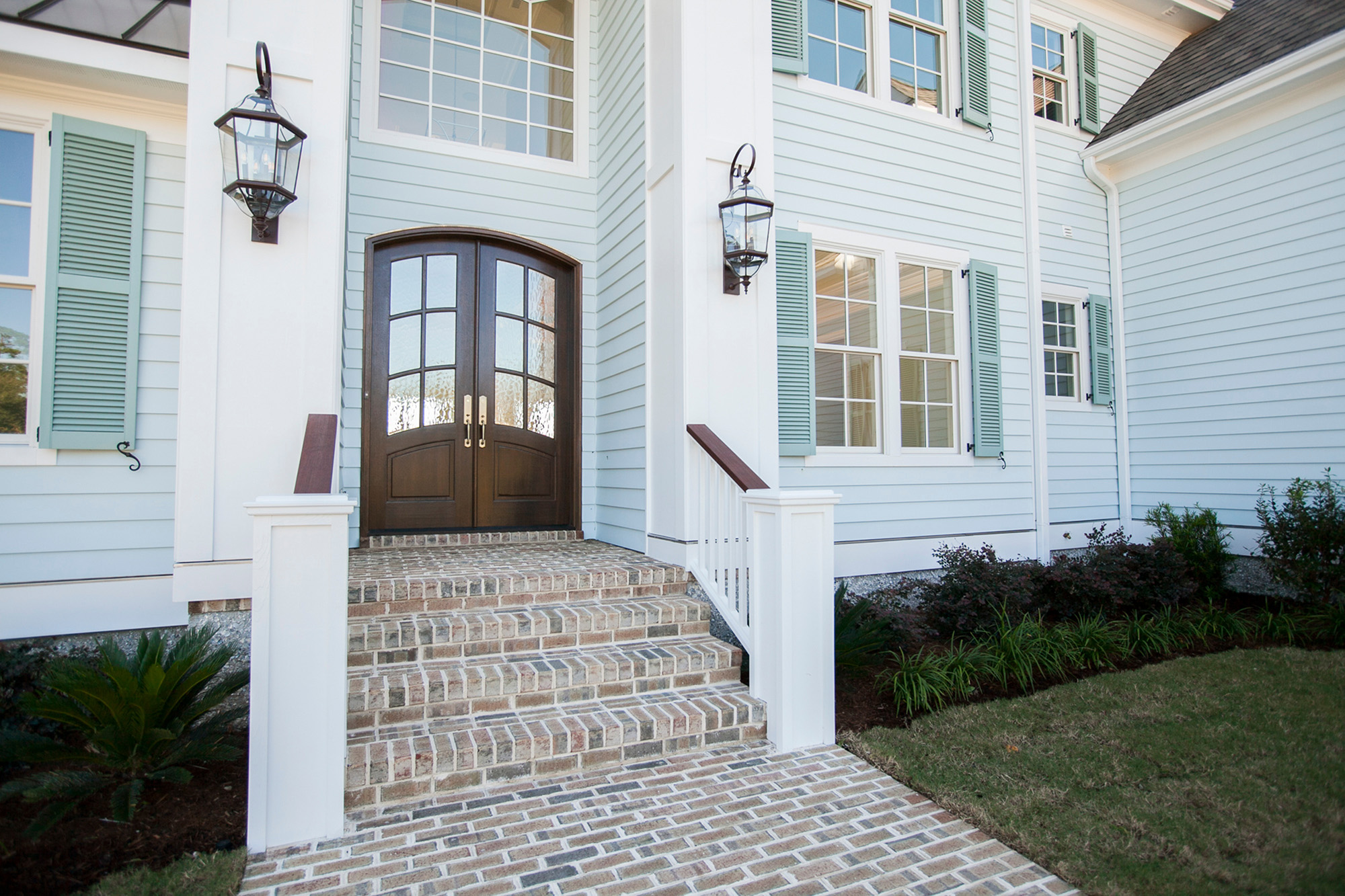
Tile near a front or back entry sits in one of the most thermally exposed spots in a home, and in certain builds that exposure is enough to bring the surface temperature below the dew point of the air inside the entryway before anywhere else in the house gets close. What people notice as frost is usually condensation that has crossed into freezing territory right at the surface, and it points to something specific happening below the tile rather than a flaw in the material.
Tile Conducts Cold Differently Than Other Flooring
Tile has a high thermal mass and conducts temperature efficiently, which is exactly why it always feels cool underfoot even in a warm room. That same property works against it right at an entry, where the slab beneath the tile is often in direct contact with the ground outside, sometimes with minimal or no insulation break at the slab edge. Cold from the ground transfers up through the slab and into the tile far more efficiently than it would through a wood subfloor with laminate or a floating floor system.
This is a well documented building science issue called thermal bridging, where a continuous material path, in this case a concrete slab, carries cold straight from the exterior ground into an interior surface with nothing to interrupt it. Entries are one of the most common places this shows up because the slab frequently extends from the exterior stoop straight into the interior tile with the same pour.
Why It Happens Before The Rest Of The House Notices Anything
Interior rooms away from exterior doors are typically buffered by more wall area, more insulation, and less direct exposure to a cold slab edge. An entry, by contrast, often has an exterior door opening directly onto it multiple times a day, each opening bringing in a burst of outside air that briefly drops the surface temperature of that tile even further before it has a chance to recover.
The result is a specific combination Utah's dry fall air makes worse rather than better. When outside temperatures drop sharply overnight and the entry tile's surface temperature falls below the dew point of the humid indoor air near it, moisture condenses directly onto the tile. If that keeps dropping toward freezing before morning, what looks like frost is exactly that.
What Actually Helps
The long term fix is addressing the insulation and thermal break at the slab edge itself, which is a conversation worth having with a contractor if this happens every year in the same spot. In the meantime, a few practical steps reduce how noticeable and how frequent the issue is without requiring a full slab retrofit.
A rug or runner directly over the coldest section of entry tile reduces the exposed surface area losing heat
Weatherstripping around the door itself reduces how much cold air reaches the tile with each opening
Radiant floor heating installed under new entry tile addresses the root cause rather than masking it
If you are planning a new tile installation in an entry that has shown this pattern before, this is exactly the kind of detail worth raising with your installer at the planning stage, since a thermal break or radiant heat layer is far easier to build in during installation than to retrofit later.
Frost on entry tile is not a sign that something is wrong with the tile itself, and it does not mean you need to rule tile out for a cold entryway. It means the slab beneath it deserves a real look before the next installation. Our team can walk your entry and talk through what a proper thermal break or radiant layer would look like for your specific space. Contact us to talk through your entryway.
R-n-R Flooring and Design installs tile throughout Weber, Davis, Morgan, and Salt Lake, UT and Southern Idaho, ID and Southwestern Wyoming, WY and plans every entry installation around the realities of Utah's slab and climate conditions. Visit our showroom at Ogden, UT to see radiant ready tile options in person.


